Book Review of To Live
People live for the sake of living itself, not for anything beyond life itself.
Table of Contents
To live is the gentlest form of resistance against suffering.
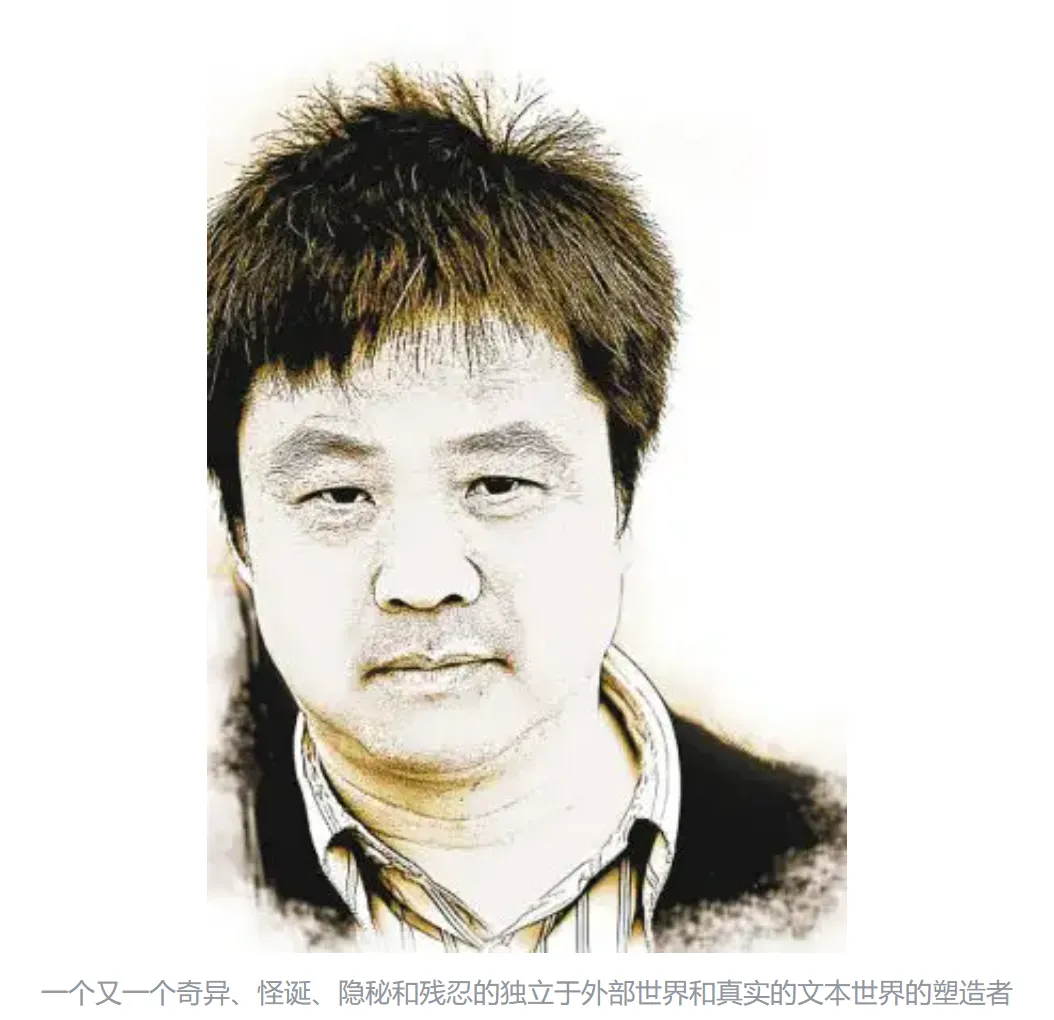
In the story of To Live, death is an inescapable undercurrent. With an almost ruthless pen, Yu Hua guides us through Fu Gui’s life: from an absurdly privileged young master to a destitute farmer who lost everything overnight. The iron fist of fate strikes time and again, yet always, on the very brink of despair, it grudgingly offers a glimmer of light; the elation when Youqing wins first place in the long-distance race, the tenderness of Fengxia’s marriage and pregnancy—these simple yet genuine moments of joy make us unable to resist hoping that “the nightmare is about to end.” Yet Yu Hua never shows mercy. With the calmest of tones, he extinguishes these glimmers one after another, as characters depart without warning in all manner of harrowing ways, leaving us alone within the text to bear the weight of this profound sorrow in stunned silence.
I still remember reading about Youqing’s death late one night, when tears welled up without warning. This child, who never gave up hope despite a life of poverty, rushed back and forth every day to cut grass for the sheep and make his way to and from school; his deep affection for the two little lambs revealed his purest love for life. When he ran toward his father, clutching the trophy for winning first place in the long-distance race, we—just like Fugui—believed that suffering was finally about to let up. But the absurdity of reality was far more bone-chilling than we could have imagined: simply because his blood type matched that of the county magistrate’s wife, who was about to give birth, Youqing was bled dry and died suddenly. “I looked at that winding path leading into town, hearing no sound of my son running toward me barefoot; the moonlight shone on the road, as if it were strewn with salt.” Yu Hua did not write of heart-wrenching cries, yet within this plain narrative lies the most bone-chilling pain.
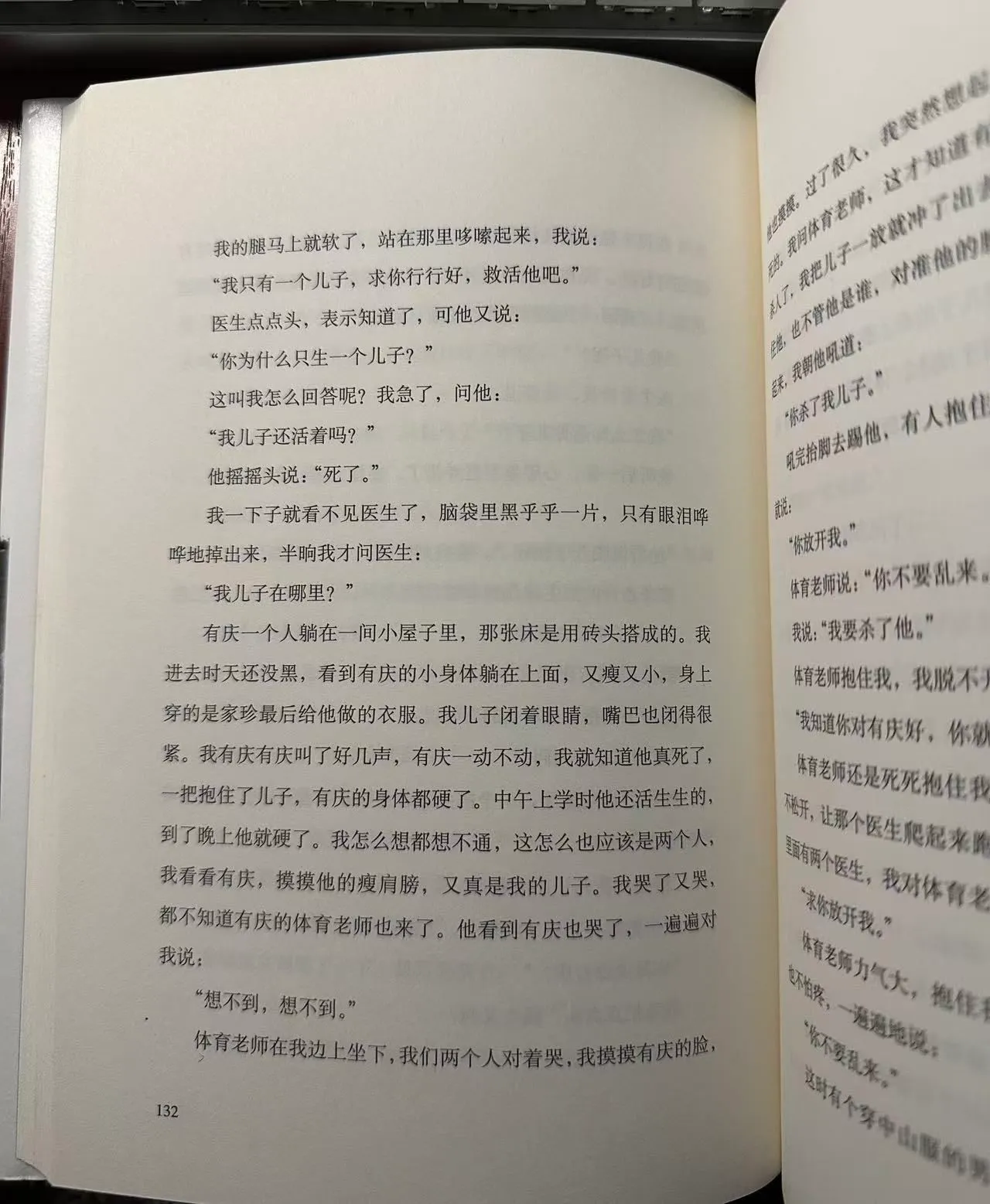
Youqing’s death was merely the beginning of the suffering. His daughter Fengxia, his wife Jiazhen, his son-in-law Erxi, his grandson Kugen… one by one, his loved ones passed away. In the end, in this vast world, only Fugui remained—along with an old ox also named “Fugui.”
For young people who have never lived through turbulent times or truly experienced the hardships of survival, this slim volume of 120,000 characters is filled with “oppression so deep one cannot even cry.” Even across time and space, we can still feel the suffocating suffering that envelops Fugui, and we cannot help but shudder at it. Yet the moment we close the book, our hearts are not filled with despair; instead, a calm arises within us—one that transcends worldly strife. It turns out that the ruthlessness and cruelty of reality are far vaster than we ever imagined; and the meaning of life has never been to avoid suffering, but rather to choose to persevere steadfastly after recognizing the true nature of suffering—this is the most primal and majestic power of life.
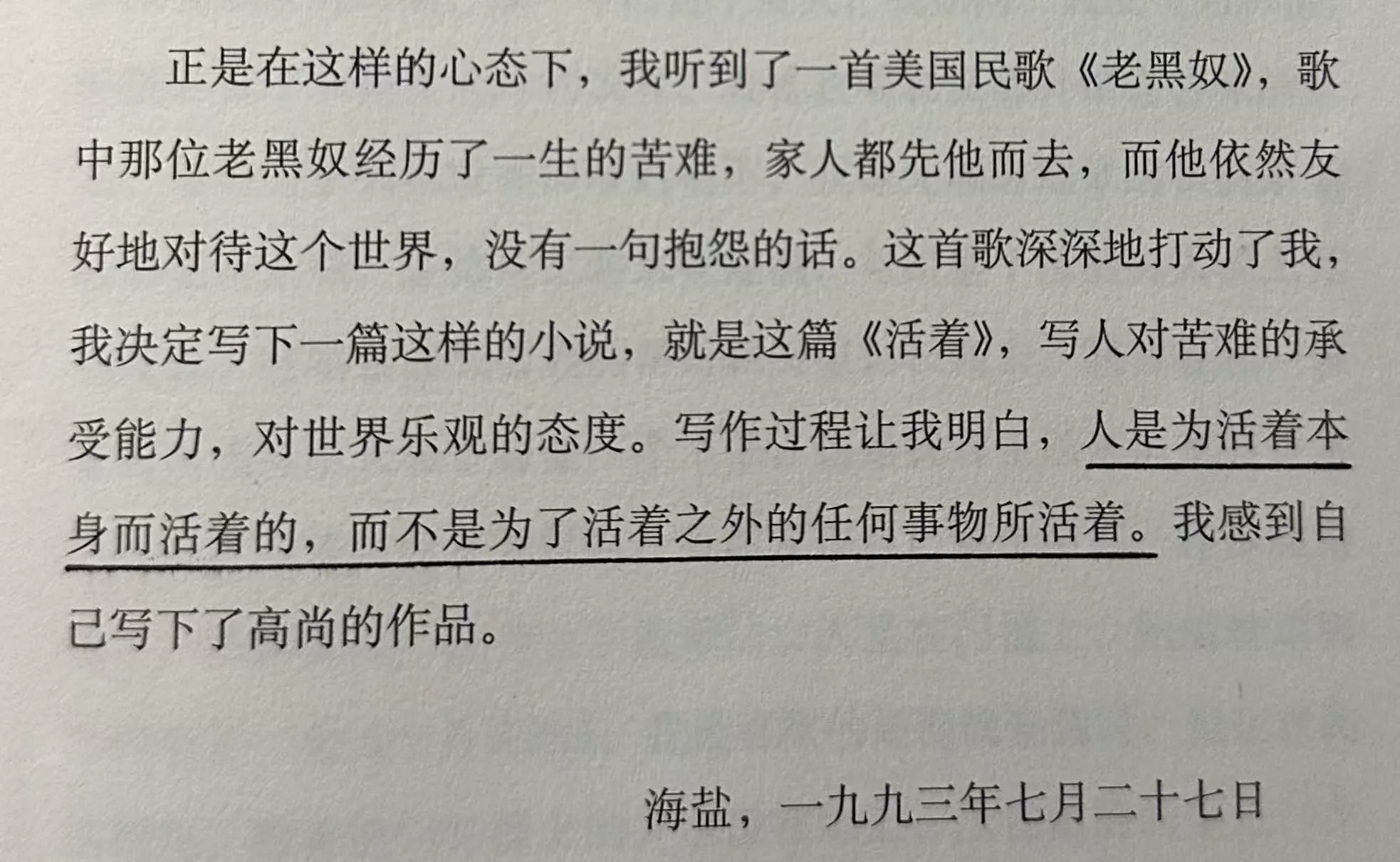
Yu Hua once spoke of the inspiration behind To Live: “I heard an American folk song called Old Black Slave. The old black slave in the song endured a lifetime of suffering; his family had all passed away before him, yet he continued to treat the world with kindness, without a single word of complaint. This song moved me deeply, and I decided to write a novel like that.” He also said: “In the Chinese language, the word ‘to live’ is imbued with power. Its power does not come from shouting or from aggression, but from endurance—enduring the responsibilities life bestows upon us, and enduring the happiness and suffering, the boredom and mediocrity that reality brings us.”
And so we see that even as death repeatedly haunts him, Fu Gui continues to live. When he recounts his sufferings to passersby, a strange expression flickers in his eyes—one that is hard to distinguish as either sorrow or contentment. Perhaps he had long since realized that most of life’s details—whether sudden moments of happiness or indescribable suffering—would be gradually washed away by time, leaving behind only pale remnants. Yet these remnants, in the end, could never truly shatter the very essence of “being alive.” Just as when we look back on the past, haven’t all those things that once kept us tossing and turning—the agony of the college entrance exams, the heart-wrenching pain of a broken romance, or the blood-soaked wounds of fresh scars—all become but a fleeting memory?
Some might ask: What is the point of such an existence? But the very attempt to probe the meaning of life may itself be a futile endeavor. Human beings are simply a form of existence—just like the plants, trees, birds, and beasts of the world—and possess no predetermined meaning.
We need not ask too many questions; we need only live like Fugui, live like that old ox—calmly accepting all of life’s gifts and hardships, without complaint or retreat. This way of living, though tinged with a touch of desolation, is the gentlest and most powerful resistance to suffering.